Casual dining operators are facing a market with no traffic growth and little to no cheque gains (even with inflation), with top chains pulling ahead of independents. On one hand, operators need strategies to drive traffic to high-cheque dayparts like supper. On the other hand, they have to make the most of each visit. The beverage menu is one of the first places customers bypass to resist growing their cheques, and beverage incidence has been declining gradually year over year.
Capitalizing on consumer trends towards microbrew or “craft” beers and wine is proving to be an effective way to encourage those high-margin beverage sales and keep cheques up. Customers are ordering more of these beverages, and while wine customers have higher eater cheques than beer customers, microbrews bridge that gap with typically higher price points.
| Through The NPD Group’s CREST® Monitor, we see that alcoholic beverages have been more resistant to beverage declines than other favourites, but servings have averaged declines of -1 per cent a year since 2010 at casual dining on-premise occasions. Beer is the most popular type of alcohol but has declined by -6 per cent this year. Wine is the second favourite and has grown by +16 per cent over year ago. Cocktails and other drinks are also down by -10 per cent. Within beer, however, microbrew varieties continue to drive strong growth of +7 per cent vs. last year, now accounting for 17 per cent of all beer at casual dining restaurants. The growth for microbrew beer has carried momentum for the past three years. Growth for wine is only emerging in 2014 as a recovery from previous declines, and is likely already on the menu. |
| Leveraging trends towards microbrews doesn’t mean you have to turn your restaurant into a brew pub. Those are pretty trendy but don’t define the trend all together. Some chains have the volume to brew their own proprietary blend off-site, and smaller chains and independents can partner with local breweries in their city or surrounding areas. Restaurants can even source craft beers through their major suppliers; these “macro” brand off-shoots have familiar names, but more unique, less-subtle taste profiles using different varieties of hops, fruits, or spice flavours. A new breed of beer brings with it an opportunity for a new type of server recommendation that can help grow cheques. When The NPD Group asked customers what usually triggers their alcoholic beverage choices, 20 per cent of beer drinkers said “special deals”, which often involves a discounted price. For wine customers, 23 per cent say “pairing with another item” triggered their purchase – adding value by elevating the dining experience. 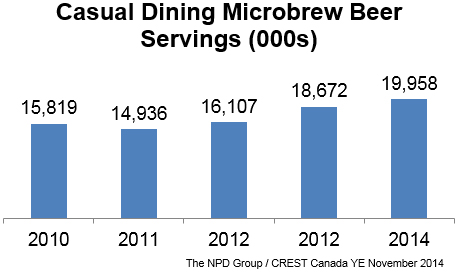 Like wine, microbrew or craft beer has an air about it that lends itself to the pairing experience. As customers start to think about beer differently, there’s no reason this technique can’t be used to reinvigorate sales of more popular brands as well. For deal-seeking or snacking customers, consider implementing combo-meal type deals instead, pairing a particular beer with a selected appetizer for a set price. Only three out of ten beer customers automatically reach for their favourite brand, leaving 70 per cent of beer customers making a choice every time they visit. Currently, only 10 per cent of choices are based on server recommendations. Operators can reach out to microbrew suppliers for pairing recommendations or visit industry sites like www.ontariocraftbrewers.com for handy guidelines. Incorporate recommendations on the menu and/or train servers on the best pairings for popular dishes. Currently brew pubs have set the expectations for beer pairing recommendations, and the door has been opened for traditional casual dining operators to benefit from the practice. See also: About the author | ||
 | ||
| < Back | ||
| ||
| Copyright © RestoBiz. All rights reserved. | ||