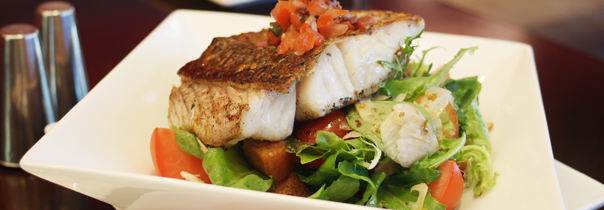
Not only do underutilized fish offer some delicious, environmentally friendly options, they are also a great way for chefs to experiment with new flavours and recipes to help entice customers into their restaurants.
Eases pressure “Opening up our appreciation to more diverse seafood options can also help to take pressure off of the standard salmon, tuna and prawns,” says Mike McDermid, partner relations manager of sustainable seafood organization Ocean Wise. “A lot of what we do with the Vancouver Aquarium’s Ocean Wise program is to help our partner chefs and restaurants find solutions – sustainable alternatives to less sustainable options. Having consumers more willing to try new options certainly makes the commitment to sustainable offerings easier for the chefs. It all begins with the chefs bringing these options to our attention through their menus.” Of course, a major factor in getting any type of fish to appeal to diners is flavour, something which most underutilized species have in abundance. “Barramundi, arctic char and ocean trout are all very versatile in the kitchen,” says Tytel, “lending themselves to many different menu applications, and are very similar to traditional fish that people are already familiar with. All three are high-quality fish with very pleasing flavour profiles.”
Budget and diet friendly With more consumers watching their waistlines and looking for healthy ingredients, many types of underutilized seafood seem to fit the bill, in addition to being a good bargain price-wise. “Underutilized species can open our palates up to flavours we have never had before,” says McDermid. “Many of these underutilized species are also incredibly healthy. For example, fish like sardines and mackerel are very oily – loaded with omega-3 and 6 fatty acids that we know are very good for us. These fish are essentially like taking a vitamin or supplement, but of course much more enjoyable. For price, underutilized species tend to be less expensive as well – often significantly so.” So if underutilized fish have so much going for them, why isn’t every restaurant featuring bluefish, mackerel or ocean perch on their menu? According to experts such as McDermid and Tytel, most of it boils down to availability and education. “Often underutilized species do not have a well developed supply lines – making it difficult for people to get the product in a timely manner, in the form that they desire, or to get consistent supply necessary to make it a regular or staple menu item,” says McDermid. “The other is that consumers are just not aware of these items yet. A concern of restaurateurs is that the item doesn’t sell and gets wasted. It can take a lot of creativity to get people to try something that they are not familiar with.” Education needed
Tytel agrees, adding that the key to introducing and selling underutilized fish and other seafood options is overcoming people’s perception. “A whole education process is required to successfully market lesser-known, underappreciated species. In turn, operators need to know how to make a lesser-known species appealing to their diners. From the kitchen to the front-of-house, everyone needs to be knowledgeable about what is being served. It helps promote a menu item and makes diners comfortable with trying something new.” Even with such challenges, there seems to be little question that underutilized fish can help restaurant owners and chefs attract environmentally conscious diners looking for something a little different. The onus, according to Mike McGlone, general manager of A.C. Covert Distributor in Nova Scotia, is on the foodservice supply chain to bring these options to consumers in a planet-friendly manner. “With global demand for wild seafood protein ever-growing, we need to be increasingly vigilant in making sure our seafood is responsibly harvested and fully utilized instead of wasted,” says McGlone. “Consumer demand and tastes, as well as chefs’ culinary creativity can and will adapt as required – just like they have over the years. After all, lobster was once considered a poor man’s lunch box item and not the celebrated luxurious crustacean it is today.” See also: |