| Canadians show a preference for strong flavours in Thai food
By Laura McGuire
May 2, 2011 | | |
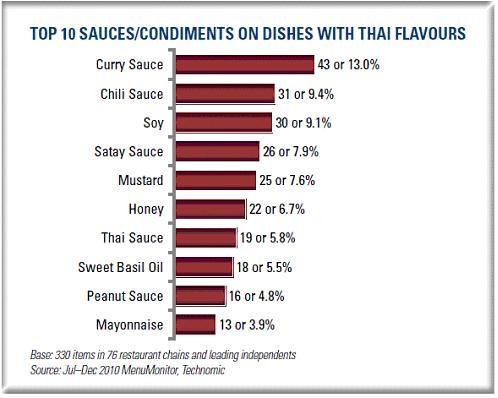
Top 10 sauces/condiments on dishes with Thai flavours Canadian operators use a wide selection of sauces and condiments on dishes with Thai flavours. Curry sauces are the most frequently used options for Thai dishes in Canada, according to MenuMonitor data. Many diners prefer curry sauce over other sauces and flavours in appetizers, soups and entrées due to its bold taste. In Vancouver, Montri’s Thai Restaurant offers Gang Dang, a curry entrée that features a choice of beef, chicken or pork in a red curry paste with coconut milk, bamboo shoots, eggplant, squash, green beans, bell peppers and Thai sweet basil. Spicy and salty chili and soy sauces are also popular choices. Simply Thai offers Gai Pad-Ped, a dish made with sautéed sliced chicken, bamboo slices, bell peppers, green onion and chili sauce with Thai basil leaves. | |
| | Mustard and honey sauces and those described simply as “Thai sauce” also appear on Thai-flavoured offerings. Crabby Joe’s Tap & Grill featured a Thai Beef Sizzler with seasoned, charbroiled steak glazed with a spicy Thai sauce over vegetables and rice. Sweet basil oil and peanut sauce are also added to Thai menu items. At Thai House Restaurants in Richmond, British Columbia, mixed seasonal vegetables feature a choice of sauce: peanut, curry, oyster, Thai black bean, Chiang Mai or sweet and sour. Versatile mayonnaise rounded out the list of top sauces and condiments seen on dishes with Thai flavours. BG Urban Café features a Thai chicken wrap with rice, chicken, mixed vegetables and mayonnaise. |
| | |
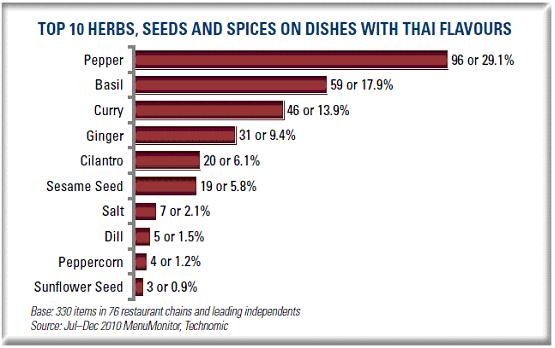
| Top 10 herbs, seeds and spices on dishes with Thai flavours Peppers are the most popular spice incorporated into Thai-style dishes in Canada, according to MenuMonitor data. Peppers are used to enhance flavours in condiments, soups and curries. They’re used on an array of ethnic foods, complementing many other ingredients. The number of pepper-accented dishes is nearly twice the number of basil-flavoured dishes and three times the number of ginger-flavoured Thai dishes. Cilantro and sesame seeds are each used in about six per cent of dishes with Thai flavours. Some diners enjoy the strong smell and bold taste of cilantro. The herb appears most frequently in salads; it also heightens the flavours of soups. In Thai cuisine, sesame seeds are commonly added to dressings and stir-fries. Zyng Asian Grill features Zyng Asian Salad with lettuce mix, snow peas, carrots, Mandarin oranges and crispy noodles tossed with grilled chicken or shrimp in Japanese sesame dressing or Thai sesame-peanut dressing. Mr Mikes Steakhouse & Bar features a Thai Chicken Salad of mixed greens tossed with red pepper, carrots, cucumber and Thai chili-sesame dressing, topped with hot diced grilled chicken and toasted sesame seeds. Salt and dill are ingredients in about two per cent of dishes with Thai flavours. The Fresh restaurant chain in Toronto features a Tangled Thai Salad with shredded carrot and yellow beets, jicama, napa cabbage, chopped peanuts, cilantro, cucumber, peanut-lime dressing and an omega-rich salad topper made with puffed quinoa, goji berries, currants, pistachios, hazelnuts, almonds and sea salt. Other ingredients occasionally added to Thai dishes are peppercorns and sunflower seeds. | |  | | < Back | | | | | Copyright © RestoBiz. All rights reserved. | |
|
| |