Back of HouseOnce the product is stored, rotated and dated you are ready to look at the areas you control in the production process. - All restaurants should have standardized recipes for each product on the menu, which is the basis for an individual food cost by item. Apply your sales mix to the item costs for an overall theoretical food cost. This is your operational food-cost target on a daily, weekly and period basis.
- Managing your food inventory is essential to controlling food cost. Key high-cost or high-usage items should be counted daily, an expanded inventory should be counted weekly and a full food inventory should be taken on a period basis. Using just food purchases as a basis for food-cost calculation will provide inconsistent and inaccurate analysis.
- Inventory can become inflated with improper ordering procedures, which are usually the result of inaccurate sales forecasting. Too much inventory will cause excess waste and tie up valuable working capital. Too thin a level of inventory will cause product shortages and under portioning. Regardless of who counts the inventory, it is wise to never trust this process to just one person without some form of random or consistent validation. “Ghost” inventory can easily be counted on the books for months, hiding theft or other issues.
- A general rule of thumb is that a good dollar value for your food inventory is 10 to 15 days worth of usage. Your fresh products and short shelf life products should be turning at a faster rate than frozen and dry, for example.
- Managing food waste is important to overall food-cost management. Food that is wasted is money down the drain. To properly track and then troubleshoot food-waste problems, it helps to do two waste counts each shift:
o Production waste includes all products wasted as a result of the food production and assembly process. Examples of this are over- or under-cooked portions, items returned to the kitchen from service staff, and food dropped on the floor.
o Raw product waste is a result of poor inventory management such as stale-dated products or spoiled products caused by lack of proper rotation. Other raw product waste can come from delivery shortages or improper handling. - Good kitchens have two different-coloured waste buckets in the kitchen, one for finished/production waste and one for raw waste. These are counted and itemized each shift. This helps quickly pinpoint where your training focus should be.
Front of HouseMost operators tend to focus their food-cost efforts on the back of the house. Your service staff can sometimes be the cause of high food cost and this often goes undetected. - Even with accurate theoretical food costs, changes in menu mix can skew your food-cost percentage. Total food cost is a function of a mix of high-cost items and lower-cost items. If service staff, your menu design or daily specials disrupt the balance of high- and low-cost items your overall cost will increase.
- Many operators look too quickly at menu prices as an easy way to solve food-cost problems. This should be the last option to consider as you may well be asking your guests to subsidize your inefficiency. This certainly isn’t sustainable and if problems continue to go unidentified, you’ll be faced with raising them again!
- Another area that can impact food costs in the front of house is revenue skimming. Running a high percentage or dollar value of voided sales at the cash register or having unrecorded revenue when staff gives food away can reduce the sales and raise the cost percentage.
- Poor service staff training can cause inaccurate orders, wasted food and customer dissatisfaction when meals or items have to be corrected or replaced.
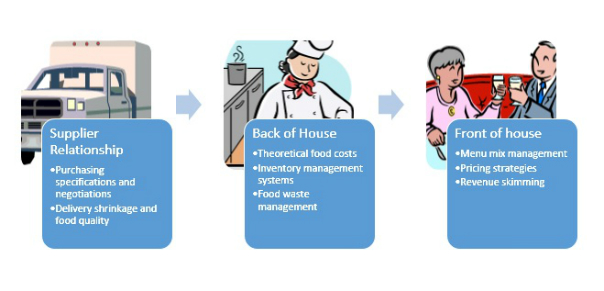 Key takeaways- Know what your food cost should be and needs to be for your specific business
- Manage and check all the critical points in the flow of food from supplier to guest
- Have systems and checkpoints to validate every step
- Never assume the last problem you had with food cost will be the same this time
Food is your business, treat it with respect and always choose quality over cost! That’s what your guests want and are happy to pay for. See also:
About the author: Neil Lester is a restaurant and franchise executive with over 35 years’ experience. He brings his clients specific expertise in the areas of franchising, business planning, scalability and cost efficiency. He has provided advice to quick service, casual dining and fast casual chains as well as industry suppliers both in Canada and the United States. | |